Small Cabinet
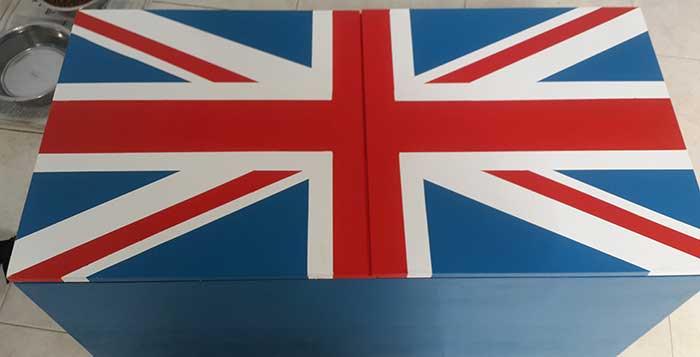
I had a cabinet that was left in the apartment after we bought it (the apartment) and it was setting for months in an extra room without really much use. One day, Vered came to me with an idea to paint the small cabinet with the UK flag and use it, instead of letting take space unsued. What started as her idea, ended up as my project and my "problem". I have to say that this project is the largest wood project that I have done until that day and looking at the flag it was a little scary (not very easy flag to do) but as I am not under clock or any pressure, I have plenty of time to learn and deal with each challenge. Unfortunately, I dont have pictures of each step or a very good pictures of each step but I hope it will not stop you from reading it and understand the steps I toke to do it.
Time:
I didnt have any dead end or pressure of time for this project. I worked 15-20 minutes max each day and there are days that I didnt work at all as I didnt have the chance or time for it (including time that I was on vacation in a metal festival, sick or health problem (twice during this project) and work after noon (wednesday). The time tables I gave below are estimate only as I created this block after I am done and didnt record the time it toke each step.Before
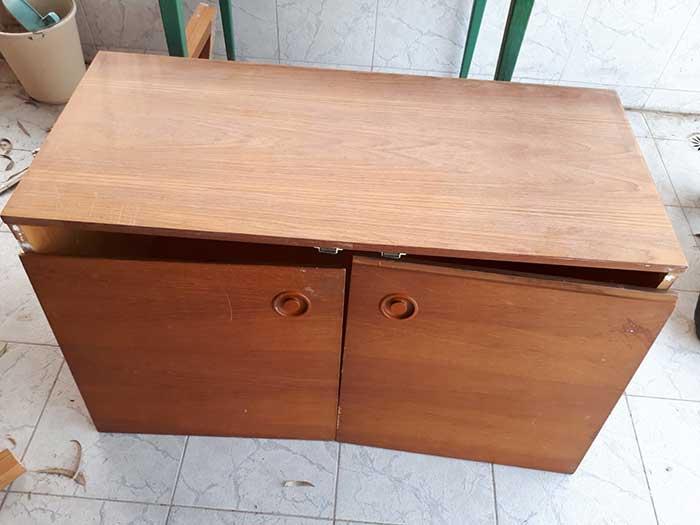
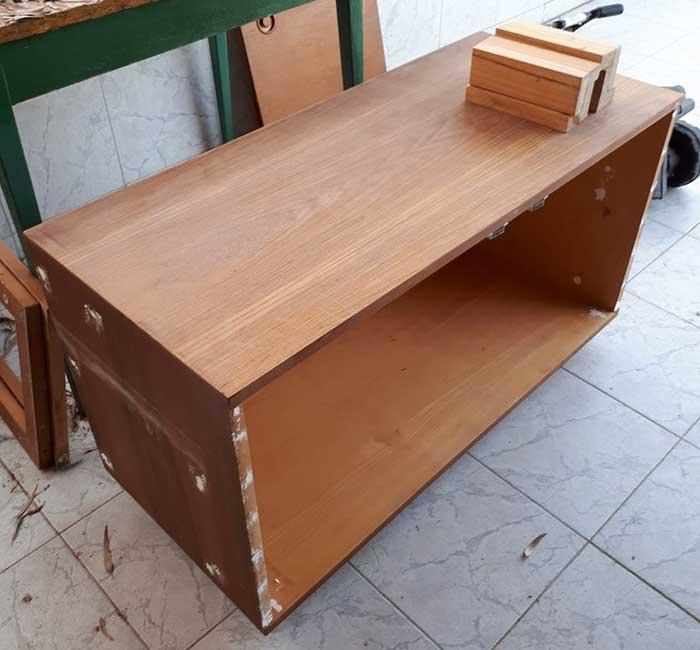
After
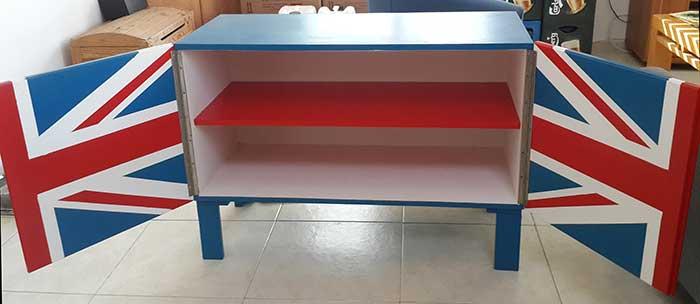
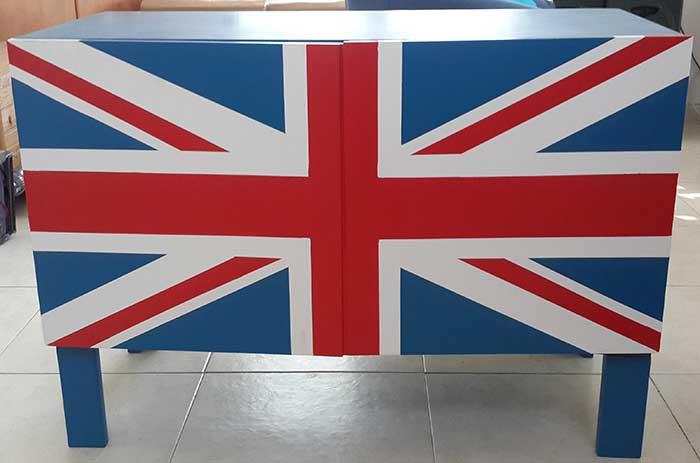
Steps
Step 1
Preparing for paint. Remove all things that possible: doors, the legs (whats left of them), the attached legs (ugly as hell) that where attached to the body to replace the missed legs, magnets that used to to keep the doors closed, the shelve. Now that the body is "naked" and noticed that it is covered with formica, at first thought I wanted to remove that and have a clean wood but after testing I found out that it will be very hard and will take hours and may hurt the wood, so I skipped this idea and. The next thing to do is closed the holes and make the wood smooth and ready for paint. I filled the holes with special 'wood filler', let it dry, smooth it and fill it again as needed. The doors had handles that where deep in and glued but here a little luck played for my side and the handles where dried wood and easy to remove. I didnt know at that point what will I do with the handles as the UK flag is going to be on the doors and painting the handles with the flag will be too hard and take too long and leave the handle alone will hard the view of the flag. Leaving the decision to later date, I moved to the next step.
Time
This step toke about 3 or 4 days as I stayed with my method of working 15-20 minutes per day and some days I didnt have that time (like wednesday which I was working and weekends).Step 2
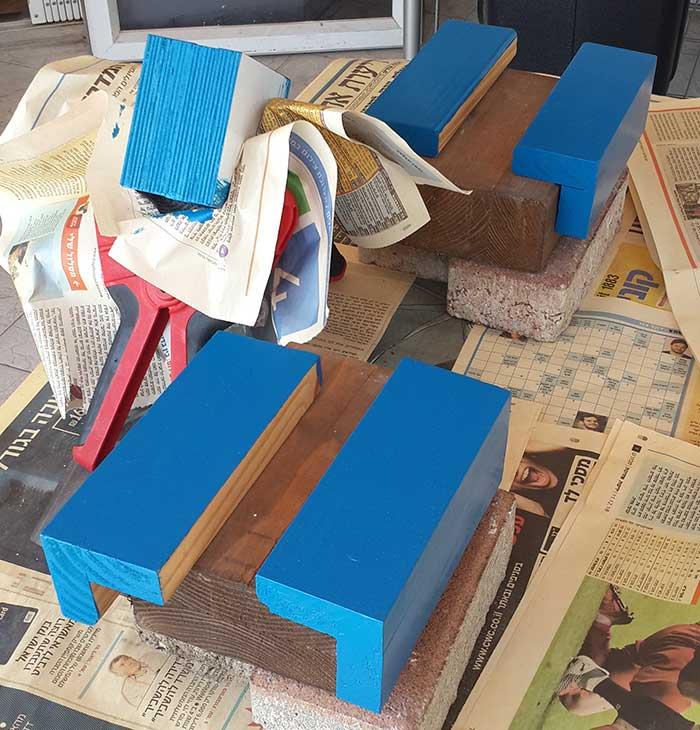
Painting. I paint the body with base color (white) because of the formica and above it blue, leaving the inner body white. It toke several layers to get to the smooth color I wanted. One good surprise I had is that I saw after 2 layers of base and 2 layers of blue that you can still see the wood pattern and I liked it a lot, so I left it as is. The doors was easier, as there was no formica on it, I got a white color (reading the instruction I saw that it can be painted directly on formica and it can be used as a base layer). The legs. I toke it off a bed that someone put on the street. I had to do some sanding and hole filling but nothing to big or complicated. Pure wood, I could paint it blue without any need for base color. I had to do several layers. I connected the legs with a peace of wood that will be nailed on top of the leg and to the body, so I had to paint the sides of the legs connector, again nothing hard here. The top and bottom of the connectors I left as is as no one will see it anyway so way paint it? It is protected by formica, so nothing to worry about it.
Time:
This step toke about 3 days. Do not rush this step as you paint the base color and the color on most of the furniture.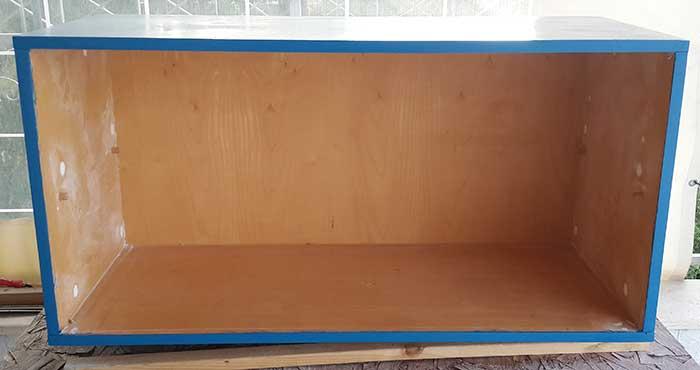
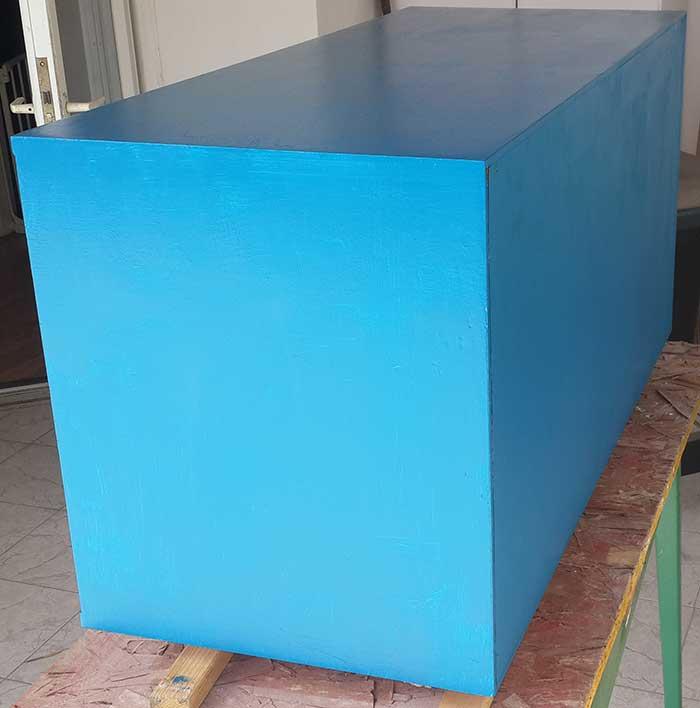
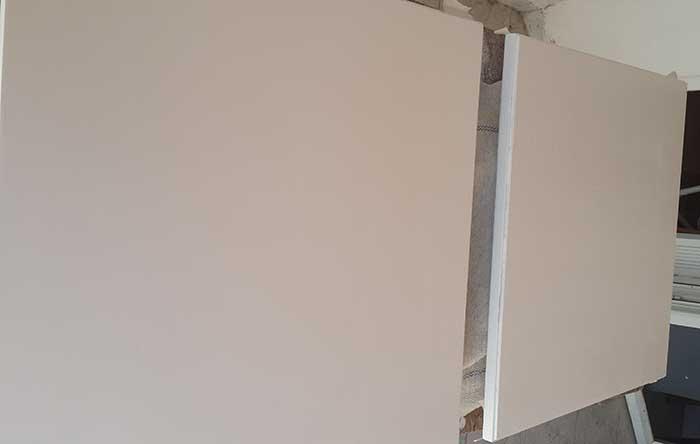
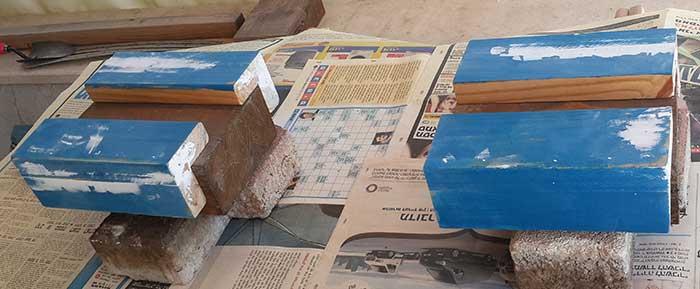
Step 3
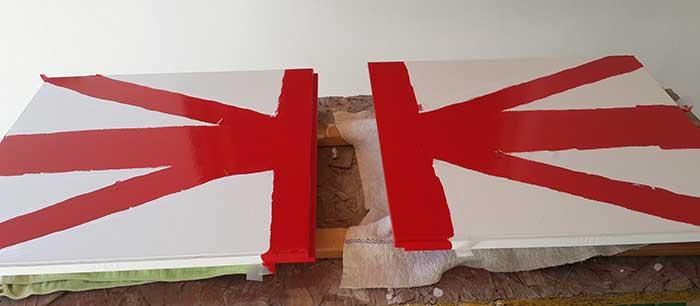
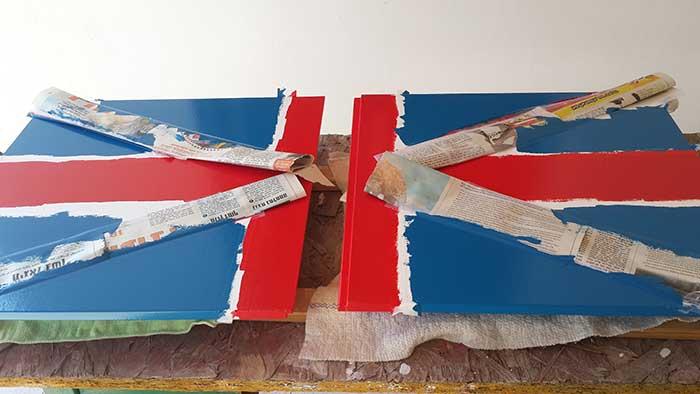
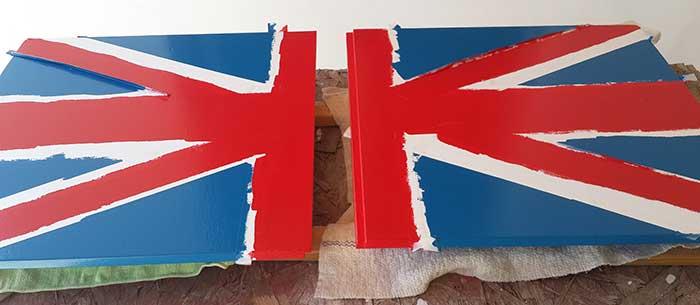
The main event: The flag. I search the web with the right UK flag and using photo edit program, I resized it to the size of the doors (100cm X 50cm). Now the interesting and long process of understanding the flag. Look at the flag and you see that it mostly symmetrical but if you look carefully on the X red line you will that this are not symmetrical and the white space on one side is bigger than the other side. Still in the photo edit program I started taking measurements of each part of the flag, the red +, the blue triangles (base, height), white spaces. I started marking with a scotch type (as recommended by a local hobby shop owner, 19mm width) the red +, than moved to the blue triangles and last the red X. Now the flag is marked and ready, time to paint. Again I followed the same logic: easy to harder. I started with the red + (England), moved to blue triangles (Scotland) and finished with the red X (Wales). I used a roller to paint, the reasons are simple, a paint brush leaves marks, true paint brush has more control and you have a small one that can fit to the corners but the minos is too big (as I see it) - the marking that the paint brush leaves (you can argue that I may not know how to use a paint brush or didnt diluted the paint enough and it may be true but I found out it is easy to paint with roller than a paint brush (specially big areas like in this project: the body, the doors).
Time
This step toke the longest, about a month (including days off), most of the time was waiting for the paint to dry properly before moving to the next layer or paint step.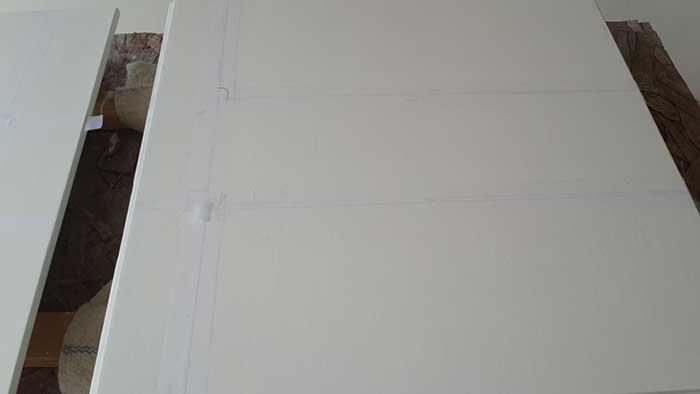
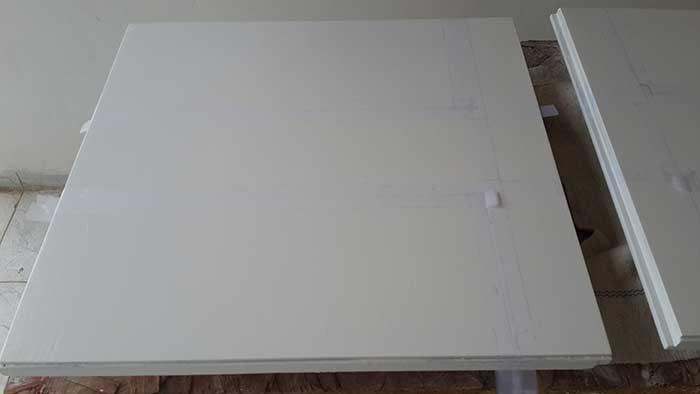
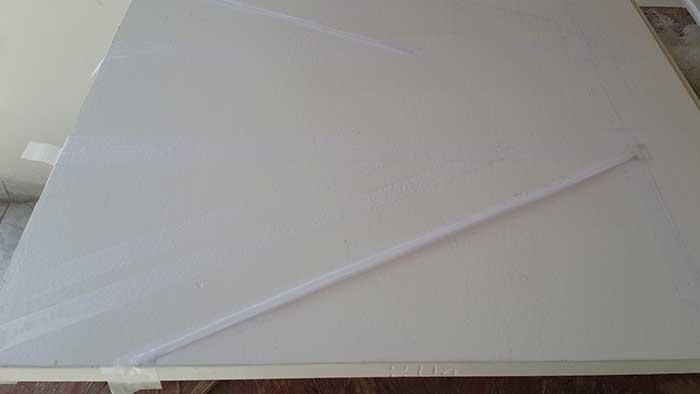
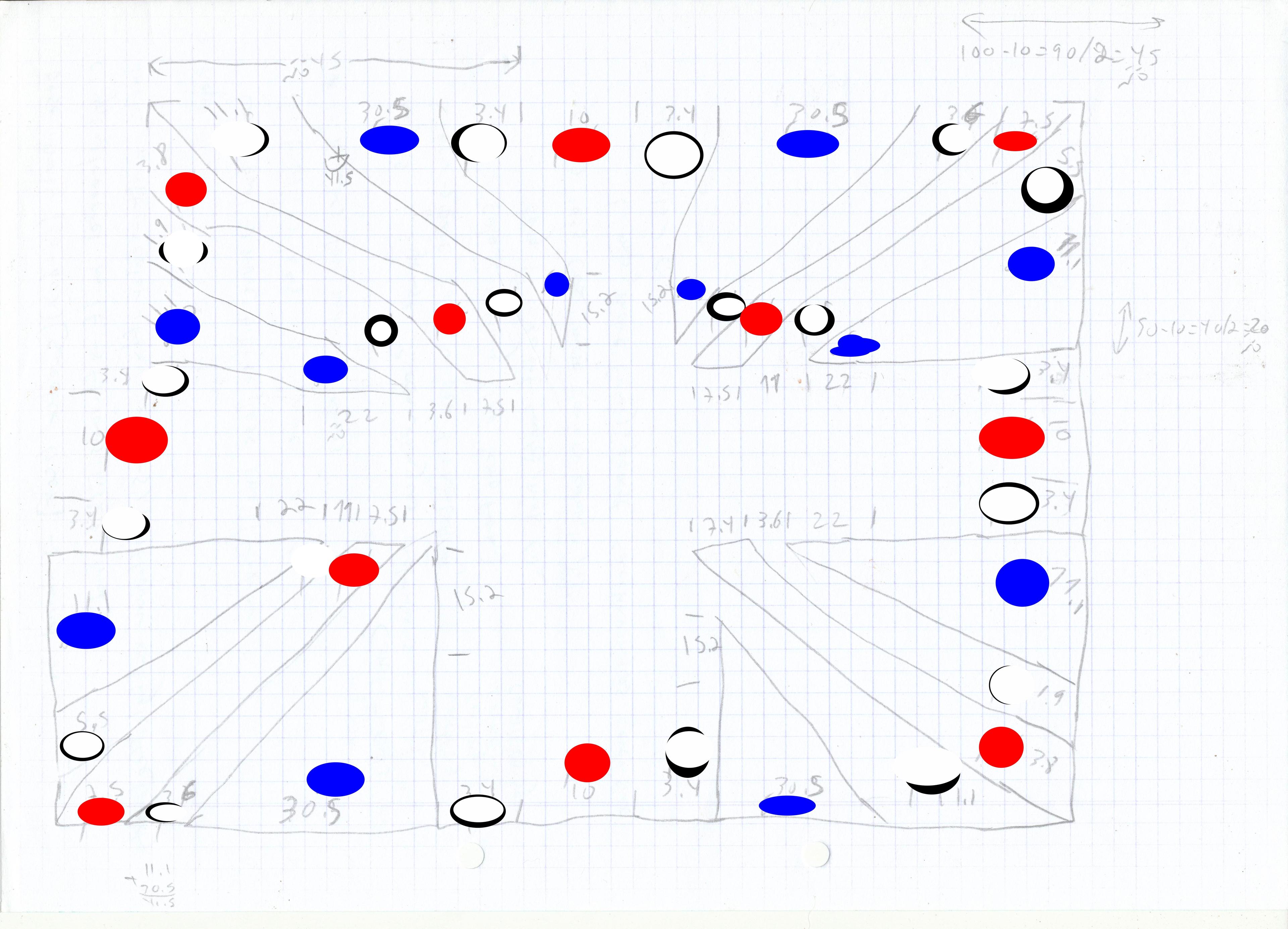
At the left picture I marked the spaces that each shape and color. Start at the border (I started at the left top corner) and moved clockwise. The numbers are in CM (centimeters) and are from one corner to the next corner.
Step 4
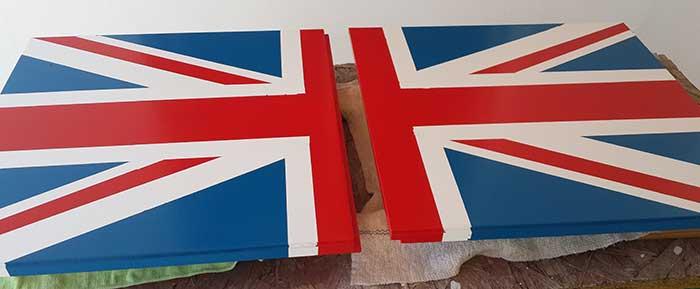
Removing the boundaries. One of the rewarding steps but can be annoying as you remove the borders (scotch types, news papers), I was nervous that the scotch will take the layer beneath it, as I pull the scotch slowly, I saw nothing from my fears happened but the scotch type didnt do me an easy life. It broke in half and I had to pill the scotch off without hurting the paint below it. After the long nerve-racking time of strip it off. I saw the flag and was happy with the results, sure there are some places needed to fix but nothing serious. Covering the near area to protect them and painting this area again. Time consuming but nothing hard to do.
Time
This step toke 4 or 5 days but that because I insisted on fixing the paint on any side even if no one will ever see it.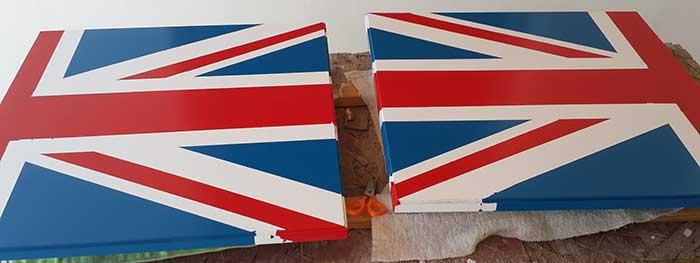
Step 5
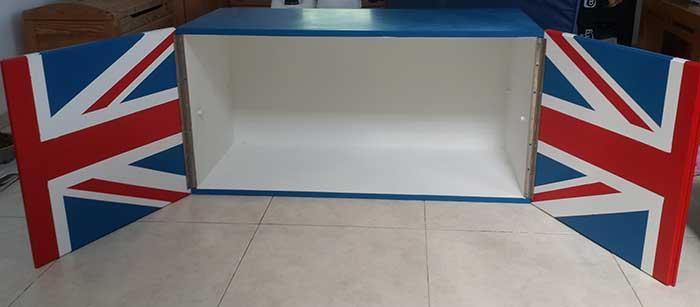
Connecting the doors. This part was the hardest in the project. As you have 2 doors but one door should over lap the second door for few mm and you need to make sure that the doors can be closed and open freely and take into account the magnet that will keep the door close. The first trial was failed has one of the doors was attached with a small angel, I had to remove the door and the hinges and refill the holes, repaint and try again. 2 trials and success. Now we have doors that can close and open freely.
Time
This step toke 3 days but that is only because I had to do the doors again.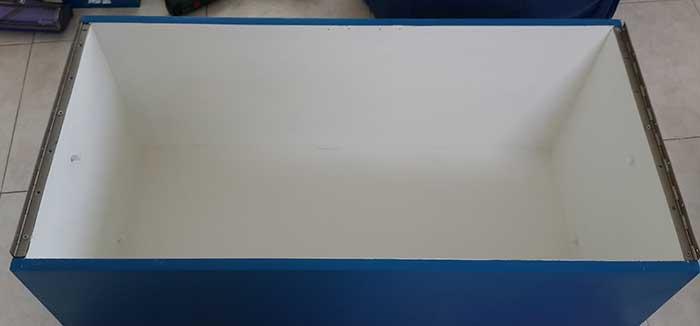
Step 6
Attaching the legs. Easy and fast step. I connected the legs with a flat wood (as I mentioned before). 2 screws to the leg, 3 screws to the body. I checked the legs and looked for the most perfect side to be attached in the front (where any one can see them), the 2 rear legs is less important how they look as no one will see.
Time
This step toke about 10 minutes, the easiest step.Step 7
Adding the magnet for the doors. At first I thought to use a magnet that when you push it, it opens a little but I found out that there is no need for it and used a regular door magnet. I used a pencil to mark the place for the magnet (same place as the old magnets) and to mark the metal on the door. I noticed that 1 magnet for the upper door is enough and doing the door well, so I didnt attached the second magnet. I can always add the second one if needed.
Time
This step toke 2 days, as I didnt want to rush it and wanted to measure and test it properly before the final attaching the magnets.Conclusions & Remarks
* Preparing
Take your time with this step, make sure you remove any thing that can be removed (without breaking anything).* Sanding between the layers
Sanding properly and filling any holes in the wood that need to be filled. You will probably need to refill and sanding again after the first layer of paint as you will see new cracks and holes, dont worry about it and most important Do Not Rush. I saw some youtube clips recommending to sand the wood between each layer with a very fine sand paper. I didnt do it in this project as I was afraid it will damage the paint I have done. I am going to do it in the next future projects. This fine sanding will remove the depth differences that happens between layers and make the paint feel smooth.* Dont Rush!
Never rush. When you get the feeling that you are close to finish line and just want to cross it, you start to rush things and make mistakes that make you do things again and again (in my example it was the connection of the doors). When you get this feeling stop. Do not rush!* Measure twice (or three)
I already mentioned it before but it worth saying it again. Measure twice/test it twice and even 3, 4 and 5 times to make sure you (connect the doors right, mark the line correctly). There is a saying "measure twice, cut once". Follow it.* Complicated? so what???
Sure, in the 1st and even second glace on the UK flag it seems complicated and hard to do (I have seen many that done the UK flag but done it symmetrical and not as the flag should be). Take your time to check and measure, understand what you need and how to do it. Try it dry in your head (or imagination). I thought it will be the complicated part of the project but it end up as the funny and most interesting part of it. Complicated = interesting = challenging.* Roller
That maybe the best tip in this list. Use a roller to paint. It is easier and faster. Doesnt leave a mark (dont be afraid to dilute the paint as you seem fit, it will dry). True, in the points it will be little harder but cover the parts you dont want to paint with scotch type and news paper and paint away.* Paint
I saw many carpenters and DIY people saying it and they right. Dont be afraid to dilute the paint more than what it says in the instruction (but dont over do it too), it will dry. Sure it will take more time but it will dry evenly and smooth.